Chest drainage insights
Time to read: 1 min.
Effective evacuation of intrathoracic fluids, such as exudate and blood, is critical following cardiac surgery. The postoperative accumulation of fluid within the pericardial and/or pleural spaces is collectively referred to as retained blood syndrome (RBS).
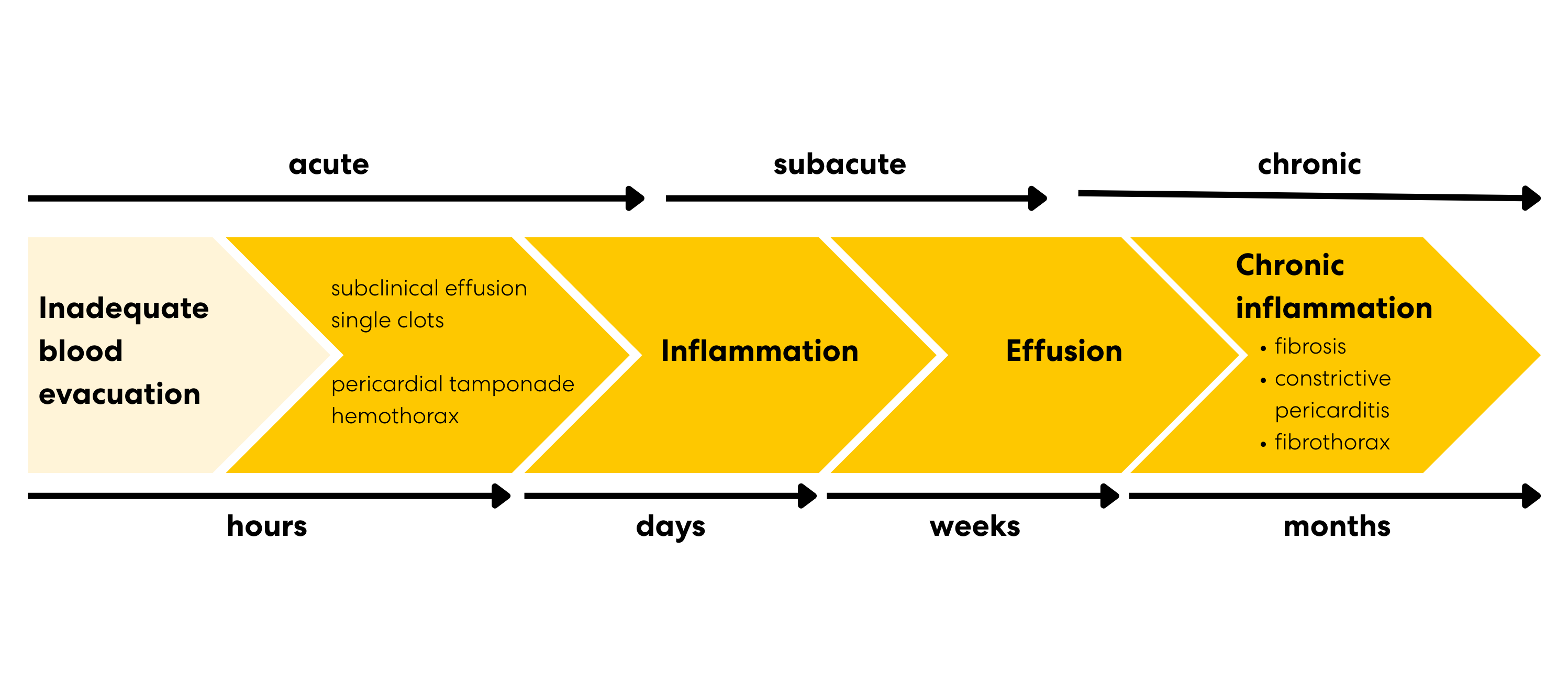
RBS following cardiac surgery promotes prolonged pericardial inflammation, leading to effusions that can compromise cardiac function in the long term. RBS is associated with increased perioperative morbidity, including higher transfusion rates, re-explorations, transient atrial fibrillation, prolonged ICU stays, and extended ventilation. Both prophylactic and therapeutic strategies are essential to mitigate its impact on postoperative outcomes. 2
Effective drainage immediately after surgery is crucial for improved outcomes. A recent retrospective study3 investigates the impact of different chest drainage modalities on retained blood syndrome (RBS) and associated complications after coronary artery bypass graft (CABG) surgery. Both active tube clearance (ATC) technologies and portable digital drainage systems (Thopaz+) outperformed conventional drainage in reducing retained blood syndrome (RBS) interventions. Thopaz+ provided additional benefits, including lower early re-exploration for bleeding, postoperative atrial fibrillation (POAF) incidence, packed red blood cells (RBC) transfusion needs, and resource utilization.
Click here to read a summary of this study or here for the full publication.
1. Tauriainen T, Kinnunen E-M, Koski-Vähälä et al. Outcome after procedures for retained blood syndrome in coronary surgery. Eur J Cardiothorac Surg 2017;51:1078–85.
2. Ref: Niemann B, Grieshaber P, Retained blood syndrome after cardiac surgery, EJCTS, Volume 67, Issue Supplement_1, March 2025, Pages i3–i8, https://doi.org/10.1093/ejcts/ezae282
3. Kalisnik JM, Zujs V, Zibert J, et al. The impact of a chest drainage system on retained blood-associated complications after cardiac surgery. EJCTS. 2025 Mar;67(Supplement_1):i9-17. https://doi.org/10.1093/ejcts/ezaf007
Articles that may be of interest