現在表示中の内容:
Medela - Japanese
以下の国では、メデラのウェブサイトの代替となるものを選択できます:

Knowing how to measure your nipples and find the right flange size is everything when it comes to comfortable pumping and optimal milk flow. Pumping should also never be painful. That’s why Medela offers various flange sizes.

Breast pumps are designed to fit your breasts, and more specifically, your nipples, which can even vary from breast to breast. To make sure your breast pump does its job, make sure you learn about breast pump flange sizes, also known as breast shields. Flanges are designed to fit directly over your nipple. When you pump, your nipple ( make sure it is not your areola!) is gently pulled into the tunnel of the flange, just like the baby would pull on it during breastfeeding. Getting the flange size right is crucial for effective milk removal, and equally important, your comfort.
To find your ideal flange size, start by measuring your nipple. Simply follow the instructions below.
1. To measure your nipple size, use a ruler or measuring tape to figure out the size of the diameter of your nipple at the base (across middle) in millimeters (mm). Remember to not include your areola.
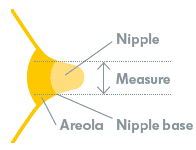
2. Based on your measurement, you can determine your Medela flange size by adding 4 mm.
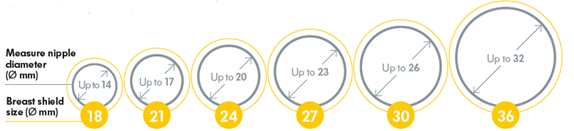
Example: If your nipple size measures 16 mm in diameter, the recommended Medela flange size is 21 mm.
3. Test your flange size.
Center the nipple and gently hold the flange against your breast.
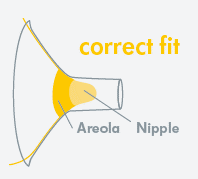
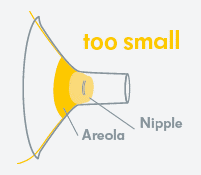
The flange size is too small if:
The flange size is too large if:
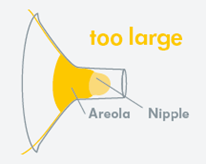
You can also download a PDF guide “Choosing your Medela breast shield size” or watch the animation below. Both contain additional information about flange sizes and reasons to try a new size.
Using the wrong flange size can lead to discomfort, pain, and reduced milk output. A poor fit may also cause clogged ducts or decreased milk supply over time.
To ensure comfortable and effective pumping, it's important to find the right flange size. Regularly checking your fit and adjusting if needed can help improve your pumping experience.
Yes, that’s possible. Your breasts can change between the third trimester and after childbirth and that includes your nipples. They may also continue to change throughout your pumping journey, so it's important to check your flange size regularly.
Yes, it's possible! Each breast is unique, and nipple sizes can vary between them. Some moms find that they need a different flange size for each breast to ensure a comfortable fit and optimal milk flow.
To get the best pumping experience, measure each nipple separately and check if both require the same size or different ones. If you're experiencing discomfort or uneven milk output, trying a different flange size for each breast may help.
Pumping should never be painful. If you experience pain, discomfort, or nipple soreness, it could be due to an incorrect flange size.
Other factors, such as high suction settings, improper pump alignment, or engorgement, can also cause pain. To improve your comfort, try adjusting your flange size, adjust suction levels, and ensuring proper nipple alignment in the flange. If pain persists, consult a lactation specialist for further guidance.


